

Specialist Disability Accommodation (SDA) Explained
What SDA funds, the four design categories, who is eligible, and how it differs from SIL.
SDA is funding for the building. SIL is funding for the support delivered inside it. They are separate line items, assessed separately, and they are often confused.
SDA is one of the most misunderstood parts of the NDIS, mostly because it is confused with SIL. This page explains what SDA funds, the four design categories, who is eligible, how to tell which one your plan includes, and where to look for a vacancy.
What does SDA cover?
SDA is capital funding for housing built or modified to a standard that ordinary housing does not meet. It pays the dwelling's owner, not you, and it does not cover your support, your rent contribution or your everyday living costs.
What are the four SDA design categories?
| Category | What the building provides |
|---|---|
| Improved Liveability | Better physical access with features that make a home easier to see, hear and understand. Built for people with sensory, intellectual or cognitive impairment. |
| Fully Accessible | Full wheelchair access throughout, including doorways, circulation space, bathrooms and kitchen. |
| Robust | Resilient construction and a layout designed to reduce risk, for people with complex behaviours of concern. |
| High Physical Support | Fully accessible plus features for very high physical support needs: structural provision for ceiling hoists, height-adjustable benches, assistive technology and backup power. |
Dwellings also come in types, which is a separate question from the design category: an apartment, a villa, duplex or townhouse, a house, or a group home. A plan that funds SDA names both. The NDIS SDA Design Standard sets out what each category has to meet.
Who is eligible for SDA?
A small proportion of participants. SDA is for participants with extreme functional impairment or very high support needs, where the building itself reduces the support required or makes it safer. The NDIA assesses it against set criteria rather than on request, and broadly it wants to see that:
- your functional impairment is extreme, or your support needs are very high;
- your current housing does not work and cannot reasonably be modified;
- SDA represents value for money against the alternatives, including home modifications and more support hours;
- it will improve your outcomes, not just your address.
It appears in the Capital supports part of a plan. Getting there usually means a home and living request supported by an occupational therapist's assessment and a housing plan. The NDIS explains the process on its SDA page.
SIL, SDA and ILO side by side
| SDA | SIL | ILO | |
|---|---|---|---|
| Pays for | The building | The support workers in a shared home | A living arrangement designed around one person |
| Budget | Capital supports | Core supports | Core supports |
| Paid to | The dwelling's SDA provider | Your SIL provider | Your ILO provider |
| How common | A small minority of participants | Much more common; most people with SIL do not have SDA | Growing, still uncommon |
| Vivid Support | No | Yes, in Glendenning | We deliver the supports inside an arrangement |
How to tell which you have
Look at your plan. SIL appears under Core supports as assistance with daily life in a shared living arrangement. SDA appears under Capital supports and names a design category and a location type. Many people have SIL without SDA, which simply means the support is funded and the housing is a normal rental like anyone else's.
If you have SIL and not SDA, our Glendenning vacancy may suit. If you have SDA, talk to an SDA provider or the Housing Hub, and our team can direct you to the main listing services.
How to find an SDA vacancy
Three places are worth knowing. The Housing Hub is the largest independent listing site for disability housing in Australia and is free for people looking. Nest, run by Northcott Innovation, lists SDA and non-SDA vacancies and is also free. The NDIS has its own guidance on finding SDA.
When you find a dwelling, check the design category against what your plan funds, ask who delivers the support inside it and whether you can choose a different provider, and ask what the reasonable rent contribution will be. SDA and SIL are separate decisions, and you are allowed to keep them separate.
What you pay if you live in SDA
SDA funding goes to the dwelling provider. You still pay a reasonable rent contribution, normally set at a share of the Disability Support Pension plus any Commonwealth Rent Assistance, and you pay your own utilities, food and everyday costs, exactly as in any home.
Questions about SDA housing
Where do I find an SDA vacancy?
The Housing Hub and Nest both list disability housing vacancies across Australia and are free to search. We deliver supported independent living in ordinary homes, and our team can direct you to suitable listings.
What is the difference between SIL and SDA?
SDA pays for the building. SIL pays for the support delivered in it. You can have SIL without SDA, and most people with SIL do. Having SDA without any support funding is unusual.
Is the Glendenning home wheelchair accessible?
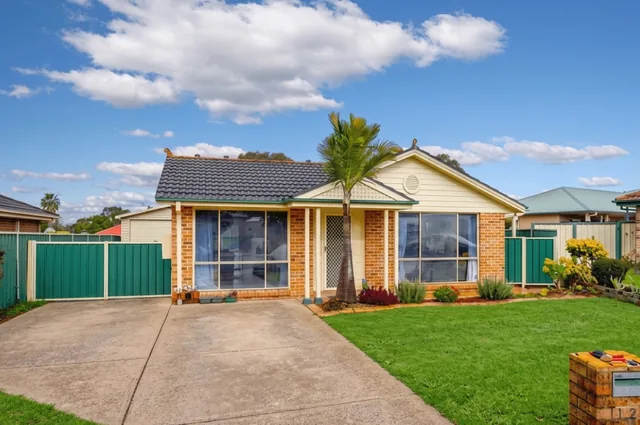
No. It is a standard single-storey home with standard doorways, a small step at the front entry and no roll-in shower or hoist. It suits people who move around a home independently or with minimal assistance.
Can I get SDA added to my plan?
Only at a plan review, and only if you meet the criteria. It needs evidence from an occupational therapist. SDA is decided by the NDIA, and a provider cannot add it to your plan.
What is the Housing Hub?
An independent listing site for disability housing vacancies across Australia, including SDA. It is the usual place to look if you are searching for an SDA dwelling. Nest, run by Northcott Innovation, is a second free listing site worth checking.
How many SDA design categories are there?
Four: Improved Liveability, Fully Accessible, Robust, and High Physical Support. A plan that funds SDA names the category and the type of dwelling, such as an apartment, villa or house.
Do I pay rent in SDA housing?
Yes. SDA funding goes to the dwelling provider. You pay a reasonable rent contribution, normally a share of the Disability Support Pension plus any Commonwealth Rent Assistance, plus your own utilities and living costs.
Can I choose my support provider if I live in SDA?
Yes. SDA and SIL are separate decisions and separate providers. You are allowed to change the provider delivering support without moving house.
Make a referral or ask about a placement
Tell us the supports the plan funds and when they need to start. We respond the same business day.